Recovery, explained
Hangover recovery: what actually works
Looking for hangover recovery guidance in South Africa? Hydration can address fluid loss, but a hangover involves more than dehydration. Here is what water, food, rest and electrolyte drinks can — and cannot — do.
What alcohol actually does to your body
Alcohol suppresses vasopressin, the hormone that tells your kidneys to hold onto water. This can increase urine production and contribute to mild dehydration, which may add to thirst, fatigue and headache. It does not mean that every person who drinks alcohol has a clinically significant electrolyte deficit.
Alcohol also disrupts sleep, irritates the stomach and produces acetaldehyde as it is metabolised. These and other mechanisms contribute to symptoms. Replacing fluid does not reverse all of them or accelerate alcohol clearance.
Practical steps for the morning after
Keep the routine simple and avoid products promising an instant solution.
- Sip water or another non-alcoholic fluid steadily; avoid forcing excessive amounts
- Consider electrolytes when substantial sweating or other losses make salt replacement relevant
- Eat a meal or snack if you can tolerate it
- Rest and allow time for symptoms to settle
- Do not rely on coffee to sober you up or make driving safe
- Skip the 'hair of the dog' — it postpones the hangover rather than removing it
When water is enough — and when electrolytes matter
Plain water is an excellent everyday hydration choice. Alongside normal meals, it is often enough for routine fluid replacement. Electrolytes are more relevant after substantial salt and fluid losses, such as prolonged sweating. A product's electrolyte quantities and use context matter more than the category name.
For dehydration associated with diarrhoea or persistent vomiting, use appropriate medical advice and oral rehydration solutions where indicated, rather than substituting a functional beverage. Compare rehydration sachets and drinks.
Where AlcoHydrate™ fits
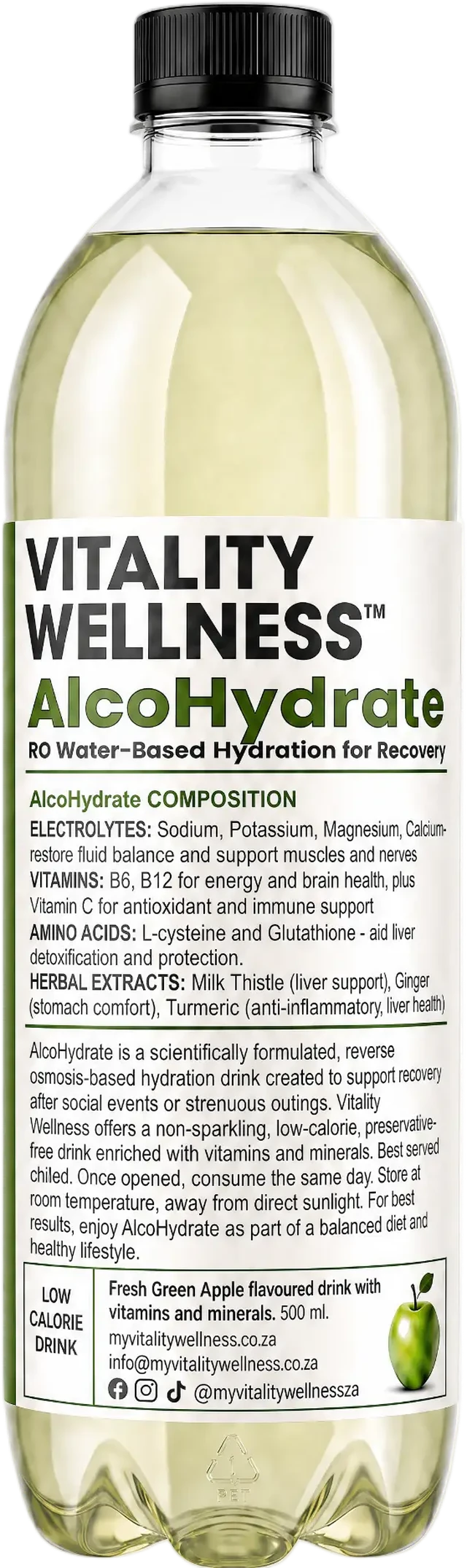 Explore AlcoHydrate™ ingredients and the sports-drink label comparison →
AlcoHydrate™ is a convenient option for fluid and electrolyte intake around social occasions. Every 500ml bottle combines sodium, potassium and magnesium electrolytes, vitamin B1, which contributes to normal psychological function, a B3, B5, B6 and B12 vitamin stack, vitamin C and zinc, which contribute to normal immune function, milk thistle extract, a traditional botanical, and 3g maximum sugar. These ingredients do not establish that the drink prevents hangovers, protects the liver or delivers faster rehydration than water.
Watch the two-minute version
Our first education episode, Hangover Recovery: Why Electrolytes Matter After a Night Out, covers the same science in under three minutes.
Evidence and further reading
- NIAAA: hangover mechanisms and the limits of proposed remedies
- NHS: everyday hydration, water and caffeinated drinks
- NHS: dehydration symptoms and when to seek help
Confusion, difficulty waking, seizures or slow or irregular breathing after drinking require emergency help. Do not assume these are ordinary hangover symptoms.
Hangover questions, answered
- What is the fastest way to recover from a hangover?
- There is no proven instant remedy. Rest, sip fluids and eat if you can tolerate food. Water is suitable for ordinary hydration; electrolytes can be useful when fluid and salt losses are significant. No drink has been shown here to speed alcohol clearance or reliably shorten a hangover.
- Is there such a thing as a hangover cure?
- There is no scientifically proven hangover remedy. Hydration can address thirst and fluid loss, but hangovers also involve disrupted sleep, stomach irritation and other effects of alcohol. Be cautious about any product promising a cure or rapid recovery.
- Why does alcohol dehydrate you?
- Alcohol suppresses vasopressin, which can increase urine production and contribute to mild dehydration. Dehydration may contribute to thirst, fatigue and headache, but it is only one part of a hangover.
- Do electrolytes actually help a hangover?
- Electrolytes help replace salts when you have lost them, for example through substantial sweating. Their presence in a drink does not prove that it improves hangover symptoms or hydrates better than water in ordinary circumstances. Water and food are often sufficient for routine fluid intake.
- What should I drink after a night out?
- Start your hydration routine before the occasion, maintain it while you socialise, and continue afterwards. AlcoHydrate™ brings sodium, potassium and magnesium, a B-vitamin stack, milk thistle extract and 3g maximum sugar into one convenient bottle.
- Does coffee help a hangover?
- Coffee can increase alertness but does not sober you up or speed alcohol clearance. Moderate coffee intake contributes fluid rather than automatically causing dehydration, although caffeine may worsen nausea, jitters or sleep disruption in some people.
- Why do hangovers get worse as you get older?
- People's responses vary. Changes in sleep, health, medication use and body composition can affect how alcohol feels; age alone does not reliably predict hangover severity.
- How can I prevent a hangover in the first place?
- Avoiding alcohol prevents an alcohol-related hangover; reducing the amount you drink reduces risk. Eating and alternating with non-alcoholic drinks can help you pace an occasion, but no hydration drink guarantees prevention or makes alcohol consumption safe.
- How long does a hangover last?
- Usually eight to twenty-four hours from the point your blood alcohol returns to zero, depending on how much you drank, your sleep and how dehydrated you became. Symptoms lasting well beyond a day warrant a doctor's opinion.
- Where can I buy a hangover recovery drink in South Africa?
- AlcoHydrate™ is launching in South Africa from Vitality Wellness, a Vitality Concepts (Pty) Ltd brand. Join the waitlist on this site to be notified the moment it is available.
Plan the recovery.
AlcoHydrate™ is launching in South Africa. Join the launch list to be first in line.
By joining you agree to receive launch updates from Vitality Wellness.
This page is general information, not medical advice. Nothing here treats or cures a hangover or makes alcohol consumption safe. Do not drink and drive. If you are concerned about your drinking or your symptoms, speak to a healthcare professional.